
EC Units vs. Conventional Surge Protectors: A Technical Reference
A standard surge protector only diverts spikes. See how the Pure Energy Stream EC Unit also supports sags, balances phases, and corrects power factor, with a lifespan, warranty, and ROI comparison built for engineering teams.
Introducing VerityOS: Audit-Ready Energy Data for ESG Reporting
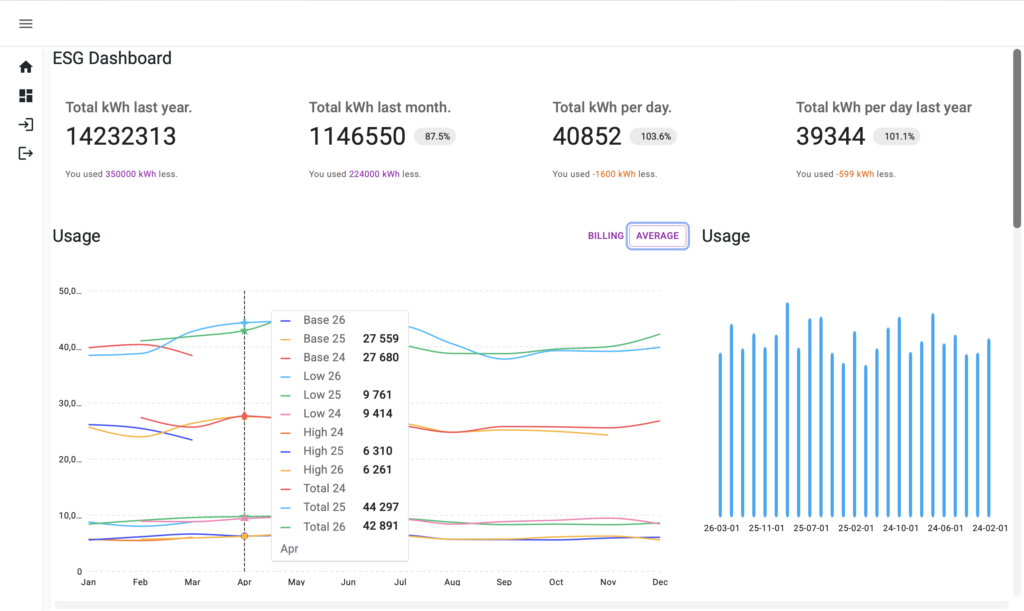
Pure Energy Stream is developing VerityOS to turn facility energy data into clearer, more credible ESG reporting. By bringing utility bills, smart-meter readings, and project records together, the platform is designed to help organizations track efficiency gains, document emissions-related results, and build a stronger foundation for evaluating future carbon-credit and tax-credit opportunities.
When a Power Event Becomes an Operational Crisis
Two real-world-style scenarios show how power surges and voltage events can disrupt hotel elevators, water-treatment controls, and other critical electrified assets.
The Surge After the Drop: Protecting Critical Assets with Better Power Quality
Protect critical assets from damaging surges, phase instability, and poor power quality with Pure Energy Stream’s energy conditioning solutions.
Three-Phase Voltage Stabilization and Load Balancing: How Electrical Equilibrium Transforms Facility Performance
Electrical imbalance is one of the most expensive problems in commercial and industrial facilities, and one of the least visible. It does not trip a single alarm or appear as a line item in a maintenance budget. Instead, it erodes performance continuously: motors run hotter than they should, breakers trip without obvious cause, and equipment that should last twenty years fails in twelve. The costs accumulate silently in energy bills, capital replacement cycles, and the slow degradation of…
How Harmonic Filtering Keeps Your Facility’s Power Clean and Your Equipment Running Longer

Your facility pays for clean power. What it often receives is something messier, a mixture of useful energy and invisible electrical noise that shortens equipment life, inflates energy bills, and quietly undermines operational reliability. That noise has a name: harmonic distortion. And for most modern facilities, it is not a fringe concern. It is an everyday reality built into the very equipment you depend on. Pure Energy Stream’s Universal Shunt Efficiency System addresses this problem at…
Pure Energy Stream Hardware vs. Solar: What Makes Sense First for Commercial and Industrial Facilities in 2026
For years, solar has been one of the most visible investments in energy transformation. It supports sustainability goals, reduces dependence on the grid, and can play an important role in a long-term decarbonization strategy. That has not changed. What has changed in 2026 is the financial equation. Commercial solar can still qualify for meaningful federal incentives, but those benefits now depend far more on timing, project structure, and compliance than many building owners realize. That…
EV Charging Energy Management: How Power Conditioning Keeps High-Power Fleets Running Clean
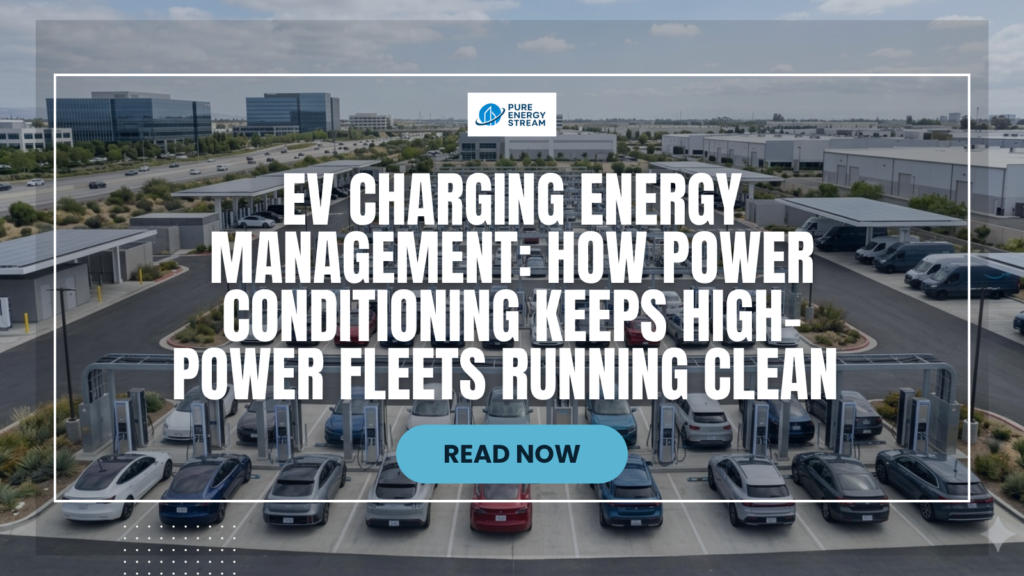
Electric vehicle fleets are scaling fast. Charging infrastructure is going in the ground. Solar carports are generating clean kilowatts overhead. And somewhere in between, the electrical system holding all of it together is absorbing punishment most facility managers never planned for. The promise of electrified commercial transportation is real, but so are the engineering challenges. Managing the simultaneous draw of multiple high-power EV chargers, integrating variable solar generation,…
Energy Conditioning Units: A Smarter Alternative to Capacitor Banks
Most facilities install capacitor banks because that’s “what you do” when the utility starts complaining about power factor. But capacitor banks come with a hidden cost: constant maintenance, sensitivity to harmonics, and a relatively short useful life. Energy Conditioning (EC) Units offer a different path, a long‑life, low‑touch asset that delivers power factor correction plus broader power quality benefits over 30-40 years of operation. What Power Factor Really Means for Your Facility Power…
Demand Response: Getting Paid to Support Grid Reliability
Demand response is one of the most direct ways for businesses to get paid for being good grid citizens, by reducing electricity use during peak demand or grid stress events. Utilities and grid operators run these programs to keep the lights on, avoid blackouts, and reduce reliance on expensive, high‑emission “peaking” power plants. Pure Energy Stream is actively working with demand response (DR) program stakeholders at LADWP and Southern California Edison to help facilities participate more…